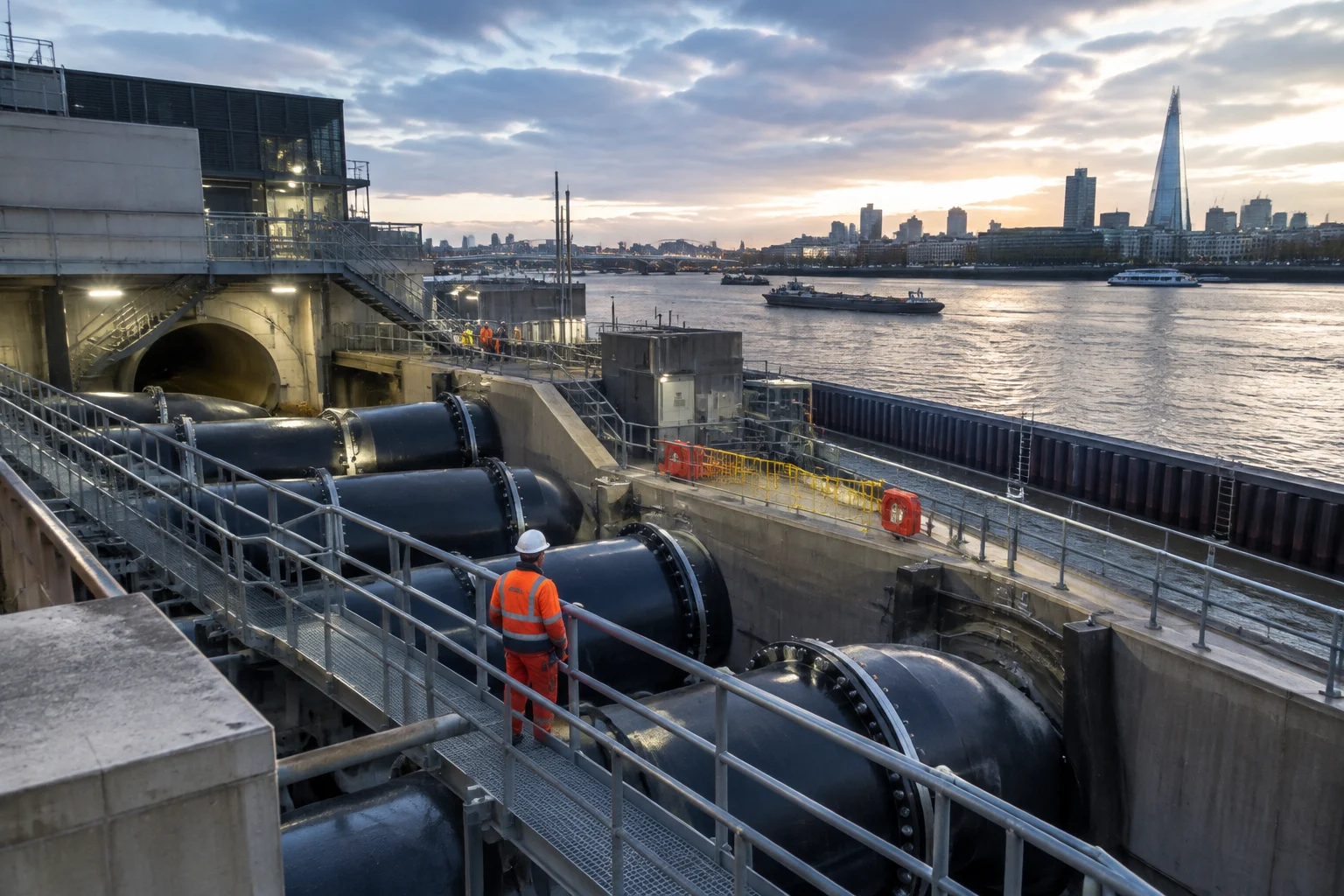
London’s £5bn super sewer has delivered a striking first-year improvement in the River Thames, according to a report from Thames Water.
The Thames Tideway Tunnel reduced raw sewage entering the river by 86% in 2025 compared with the previous average. It also stopped around 84 tonnes of litter, including wet wipes and sanitary products, reaching the waterway.
A cleaner, healthier river
The 16-mile (26km) tunnel runs deep underground from Acton in west London to Abbey Mills in the east. Its extra capacity allows more rainwater and waste to be stored, reducing sewage overflows into the tidal Thames before the contents are pumped to the treatment works at Beckton.
Thames Water said the number of days linked to increased health risks from sewage overflows fell from 269 in 2023 to 38 in 2025. Conditions for fish and other aquatic wildlife have also improved, and the company said river users could feel more confident spending time on the water.
The tunnel was completed in 2024 and came fully into use in 2025, after eight years of construction. Thames21 described it as an impressive piece of engineering, while warning that wetlands, raingardens and other approaches will still be needed as extreme weather becomes more frequent.
Why it matters for Britain
The project is helping restore one of the UK’s best-known waterways, reducing pollution risks for London’s river users and creating better conditions for aquatic life. It also shows how major infrastructure can support environmental improvements, although further action will be needed.