UK Launches Largest Home Upgrade Plan in British History to Cut Bills and Fuel Poverty
The UK Government has unveiled the Warm Homes Plan, described as the biggest home upgrade programme in British history, aimed at modernising millions of homes, reducing energy bills and tackling long-standing fuel poverty.
With £15 billion of public investment, the scheme will support energy efficiency improvements for up to 5 million homes by 2030. It is designed to help families cut energy costs by hundreds of pounds each year and lift up to 1 million households out of fuel poverty.
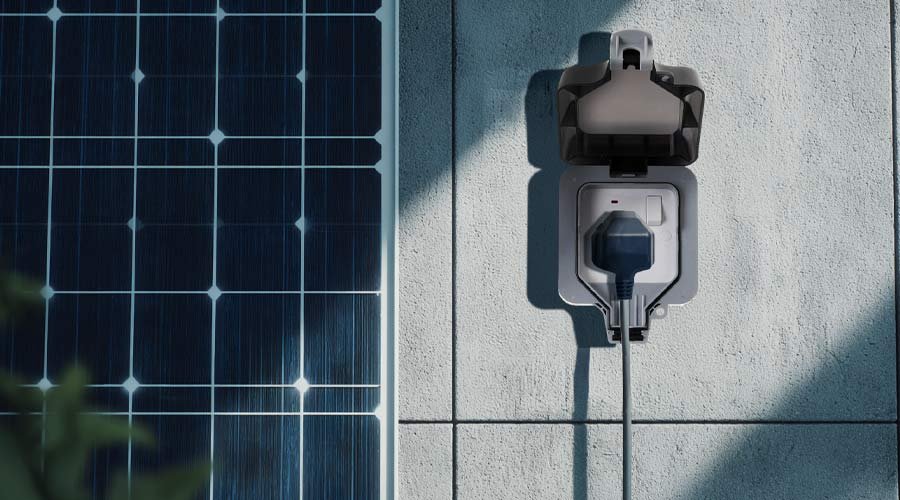
A core focus is on installing clean-energy technologies, including solar panels, home batteries, insulation and heat pumps, which can lower heating costs and reduce reliance on fossil fuels. Under this plan, around £5 billion is earmarked for fully funded upgrades for low-income and fuel-poor households, meaning these families can receive improvements free of charge where suitable.
For other homeowners, the plan introduces government-backed zero- and low-interest loans, enabling wider participation in energy upgrades across the country. There are also new protections and support for rented homes, encouraging landlords to improve energy performance.
Government officials say the Warm Homes Plan goes beyond previous schemes such as the Great British Insulation Scheme and the Energy Company Obligation, which between them upgraded hundreds of thousands of homes but saw installation rates fall sharply in recent years.
By combining direct funding with financing options and tightening energy standards for buildings, the programme is expected to deliver long-term energy savings for families and support the UK’s broader net-zero goals. Officials and industry stakeholders have welcomed the scale of the investment, noting it provides a pipeline of retrofit work and cleaner-energy adoption across the housing stock.
AI Analysis:
What would 5 million solar-powered homes be equivalent to?
If 5 million UK homes each had solar panels and a home battery, together they would generate roughly 18 to 22 terawatt hours (TWh) of electricity every year. That sounds abstract, so here is what it means in real terms.
Equivalent to gas power stations
A modern gas power station typically produces around 3 to 4 TWh of electricity per year.
That means 5 million solar-equipped homes would generate the same electricity as:
- 5 to 7 large gas power stations, running every year
In fuel terms, replacing that gas power would save roughly 3 billion cubic metres of natural gas annually. That is enough gas to heat well over 2 million homes for a year.
Equivalent to nuclear power
A large nuclear power station in the UK usually produces about 7 to 8 TWh per year.
So the same 5 million homes with solar would equal roughly:
- 2 to 3 nuclear power stations, generating electricity continuously
Why batteries matter
The solar panels create the electricity.
The batteries store it so it can be used later in the evening, when demand is high.
That means:
- Less gas is needed at peak times
- The grid becomes more stable
- More home-generated power is actually used rather than wasted
The carbon impact
Producing this amount of electricity from gas would release millions of tonnes of carbon dioxide every year.
Replacing it with home solar would avoid roughly:
- 6 to 7 million tonnes of CO2 annually
That is similar to removing around 3 million petrol cars from the road.
The big picture
In simple terms, putting solar panels and batteries on 5 million homes would be like:
- Building several major power stations
- Without smokestacks
- Without fuel imports
- And spread across rooftops already in use
It would be one of the largest single boosts to Britain’s clean energy supply from homes alone.