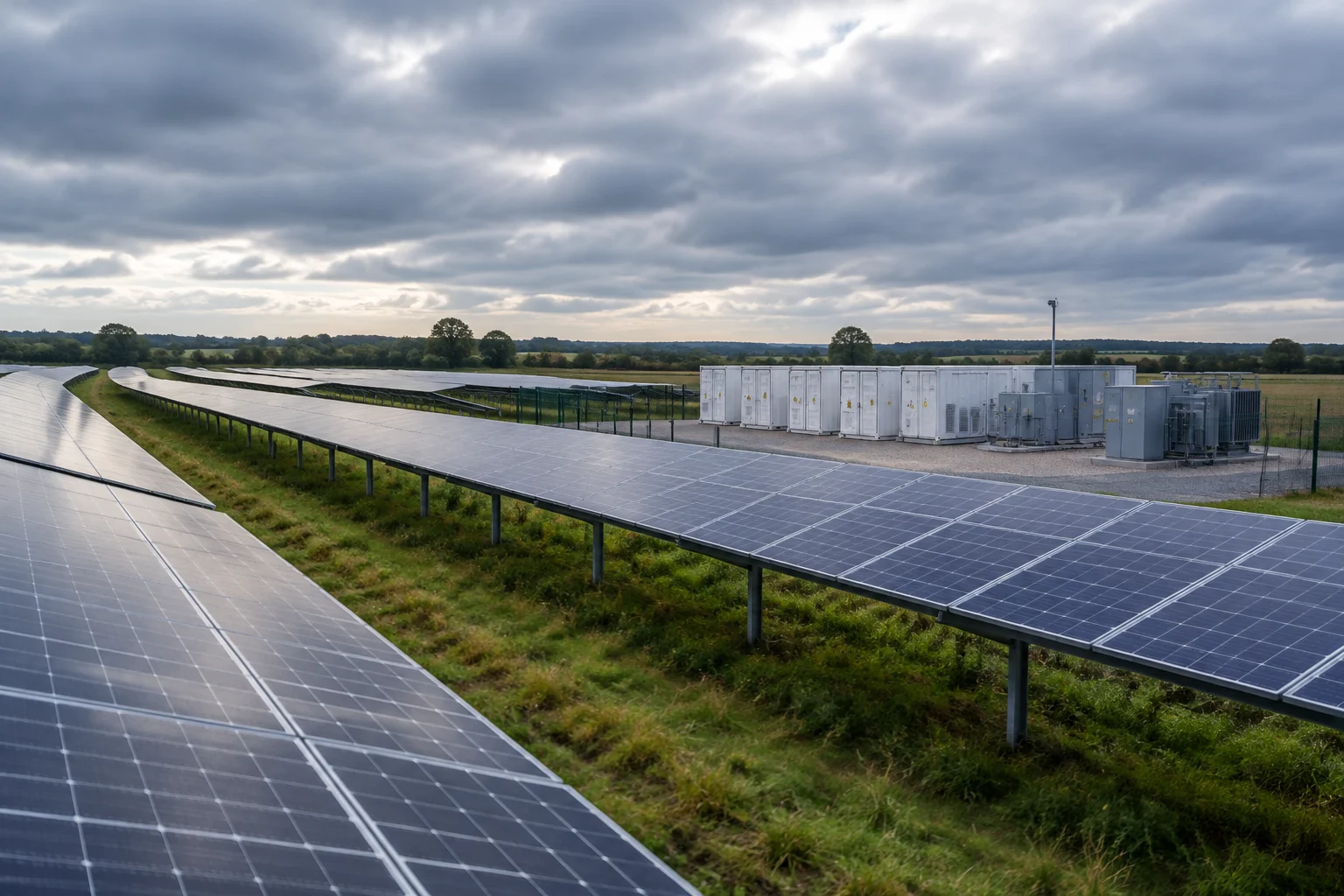
The UK’s operational battery storage fleet has reached 8.7GW, according to RenewableUK’s latest EnergyPulse assessment.
The figure represents 14.1GWh of energy capacity, while a further 9.1GW of projects with 19GWh of capacity are under construction. RenewableUK also records 2,372 active battery projects, up 432 since September 2025, with overall storage capacity rising by 21% over the same period.
About 1.1GW of battery power capacity and 2.2GWh of energy capacity entered operation during 2026. Major additions include Coalburn at 500MW/1,000MWh, Kilmarnock South at 300MW/600MWh and Ferrybridge at 150MW/300MWh.
A growing range of projects
The pipeline includes batteries designed for different jobs. Some can respond quickly to changes in electricity supply and demand, while longer-duration systems can store power for several hours before releasing it.
RenewableUK estimates that 16% of pipeline projects have a planned duration of at least four hours. However, some figures are modelled where developers have not disclosed full specifications, so final installed capacity may change.
South Yorkshire has the largest capacity under construction, at around 1,489MW, heavily influenced by the 1,400MW Thorpe Marsh development. Essex has the biggest operational capacity, at 612MW.
Why it matters for Britain
More battery capacity gives the electricity system additional flexibility, allowing power to be stored when supply is abundant and released when it is needed. Turning the construction pipeline into working assets will depend on equipment, grid connections, testing and commissioning.